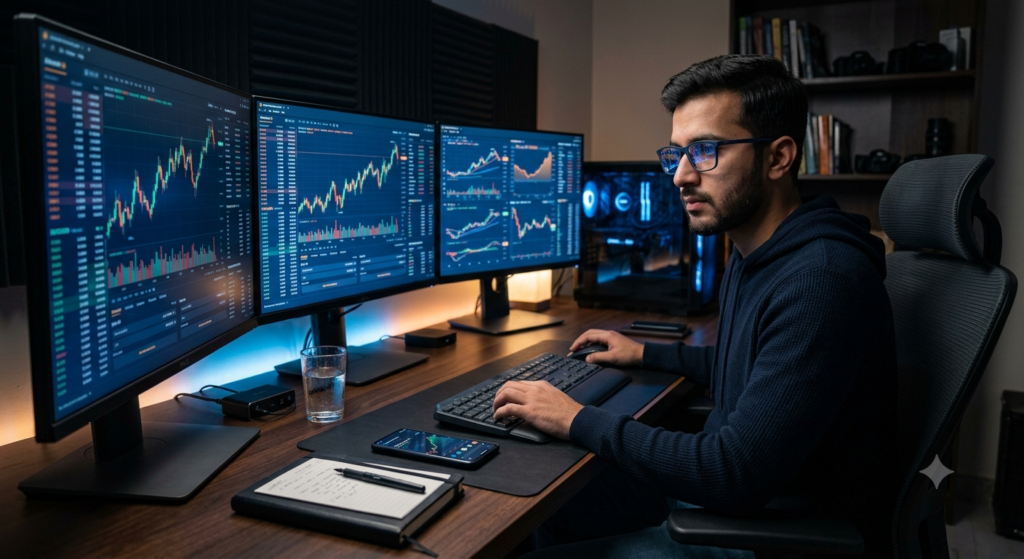

Cryptocurrency trading has become a popular way for people to participate in digital asset markets. However, crypto markets can be highly volatile, and beginners can lose money quickly if they start trading without understanding the basics.
For anyone considering crypto trading in 2026, learning how markets work, understanding risk, and developing a clear trading plan are important first steps.
What Is Crypto Trading?
Crypto trading involves buying and selling digital assets in an attempt to benefit from changes in their market prices.
Unlike traditional stock markets, cryptocurrency markets generally operate around the clock. Prices can move significantly within a short period, creating both opportunities and risks for traders.
Popular cryptocurrencies include Bitcoin, Ethereum, and many other digital assets. Each asset can have different levels of liquidity, volatility, and risk.
How Does Crypto Trading Work?
A trader typically uses a cryptocurrency exchange to buy or sell digital assets.
Depending on the platform, traders may have access to different order types, including market orders and limit orders.
A market order is generally designed to execute quickly at available market prices, while a limit order allows a trader to specify the price at which they are willing to buy or sell.
Understanding these basic order types is important before placing a real trade.
Spot Trading vs. Leverage Trading
Spot trading involves buying or selling an asset without borrowing additional funds.
Leverage trading is different because it allows traders to control a larger position using borrowed funds or a margin system.
While leverage can increase potential gains, it can also increase losses significantly. A relatively small market movement can result in substantial losses or liquidation.
Beginners should understand these risks before considering leveraged products.
Why Crypto Prices Move
Cryptocurrency prices can change because of many different factors.
These may include:
- Supply and demand
- Market sentiment
- Economic conditions
- Regulatory developments
- Technology updates
- Major industry news
- Trading volume
- Investor activity
Crypto markets can react quickly to news and changes in sentiment, which is one reason prices can be extremely volatile.
Understanding Crypto Charts
Many traders use charts to study historical price movements.
Candlestick charts are commonly used because they show information about the opening, closing, highest, and lowest prices during a selected period.
Traders may also study indicators such as moving averages, relative strength indicators, and trading volume.
Technical analysis can provide useful information, but it cannot guarantee that a particular trade will be profitable.
Risk Management Is Essential
Risk management is one of the most important parts of trading.
A beginner should avoid risking money they cannot afford to lose. Cryptocurrency prices can move sharply, and even experienced traders can experience losses.
Some traders use predefined risk limits and stop-loss orders to manage potential losses.
The appropriate approach depends on the individual’s financial situation, experience, and trading strategy.
Avoid Emotional Trading
Fear and greed can strongly influence trading decisions.
A trader may buy after a major price increase because they are afraid of missing an opportunity. Another trader may sell during a sudden decline because of panic.
Creating a trading plan before entering a position can help reduce emotional decisions.
Keep Your Account Secure
Security is extremely important when dealing with cryptocurrency.
Users should use strong, unique passwords and enable multi-factor authentication where available.
Never share account passwords, authentication codes, or private wallet keys with another person.
Be especially careful with suspicious links, fake investment opportunities, impersonation scams, and messages promising guaranteed profits.
Start Small and Learn First
Beginners do not need to start with a large amount of money.
Learning how orders work, studying market charts, understanding fees, and practicing with a demo or paper-trading environment can be useful before risking significant capital.
The goal should be to build knowledge and discipline rather than trying to make quick profits.
Common Crypto Trading Mistakes
New traders often make avoidable mistakes, including:
- Trading without a plan
- Using excessive leverage
- Investing money they cannot afford to lose
- Following social media hype
- Chasing sudden price increases
- Ignoring trading fees
- Failing to secure their accounts
- Expecting guaranteed profits
Avoiding these mistakes can improve a trader’s ability to manage risk.
Final Thoughts
Crypto trading can provide access to a fast-moving financial market, but it also carries significant risks.
Beginners should focus on education, security, risk management, and disciplined decision-making rather than searching for guaranteed profits.
Before trading real money in 2026, learn how cryptocurrency exchanges work, understand basic chart analysis, start with manageable amounts, and never risk more than you can afford to lose.